“Having a cup of tea together and building a meaningful relationship with reciprocity is the key element to success of any network. Meeting someone for the first time in response is not impossible, but it puts in so many barriers that could be alleviated through meaningful engagement and relationships.”
Have a Cup of Tea: Bridging Complexity in Emergency Management
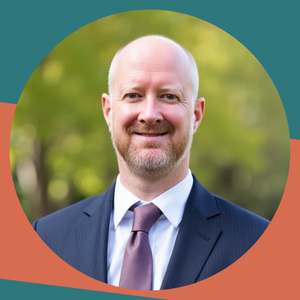
Todd Miller · Associate Director of Resilience, Auckland University of Technology
About this episode
In this episode, Matt and Tenille chat with Todd Miller about why traditional command-and-control structures only tell part of the story in emergency management. Todd shares his Complex Adaptive Disaster and Emergency Management (CADEM) Framework, exploring how trust, relationships, and recognising emergent actors can transform how communities prepare for and respond to disasters. His advice? Start with something simple, like reaching out for a cup of tea.
Key takeaways
Relationships are the real infrastructure
The connections built before a disaster, through meaningful engagement like sharing a cup of tea, are the foundation of effective emergency response.
Emergent actors matter
The CADEM Framework recognises that community groups, iwi, and other emergent actors play critical roles in disaster response, even when they are not part of formal planning structures.
Command and control has its place
Hierarchical structures are still needed in moments of crisis, but a systems approach ensures all voices are heard across the full disaster continuum.
Networks reveal hidden kingpins
Mapping relationships through social network analysis can uncover individuals whose connections are critical for information flow, and they are often not who you would expect.
Embrace continuous learning
The future of resilience lies in collaboration and adaptation. Nothing is fixed, and the system must evolve as new actors and needs emerge.
Topics covered
- Systems thinking
- Emergency management
- Complex adaptive systems
- Social network analysis
- Community resilience
- Inter-organisational collaboration
- Disaster preparedness